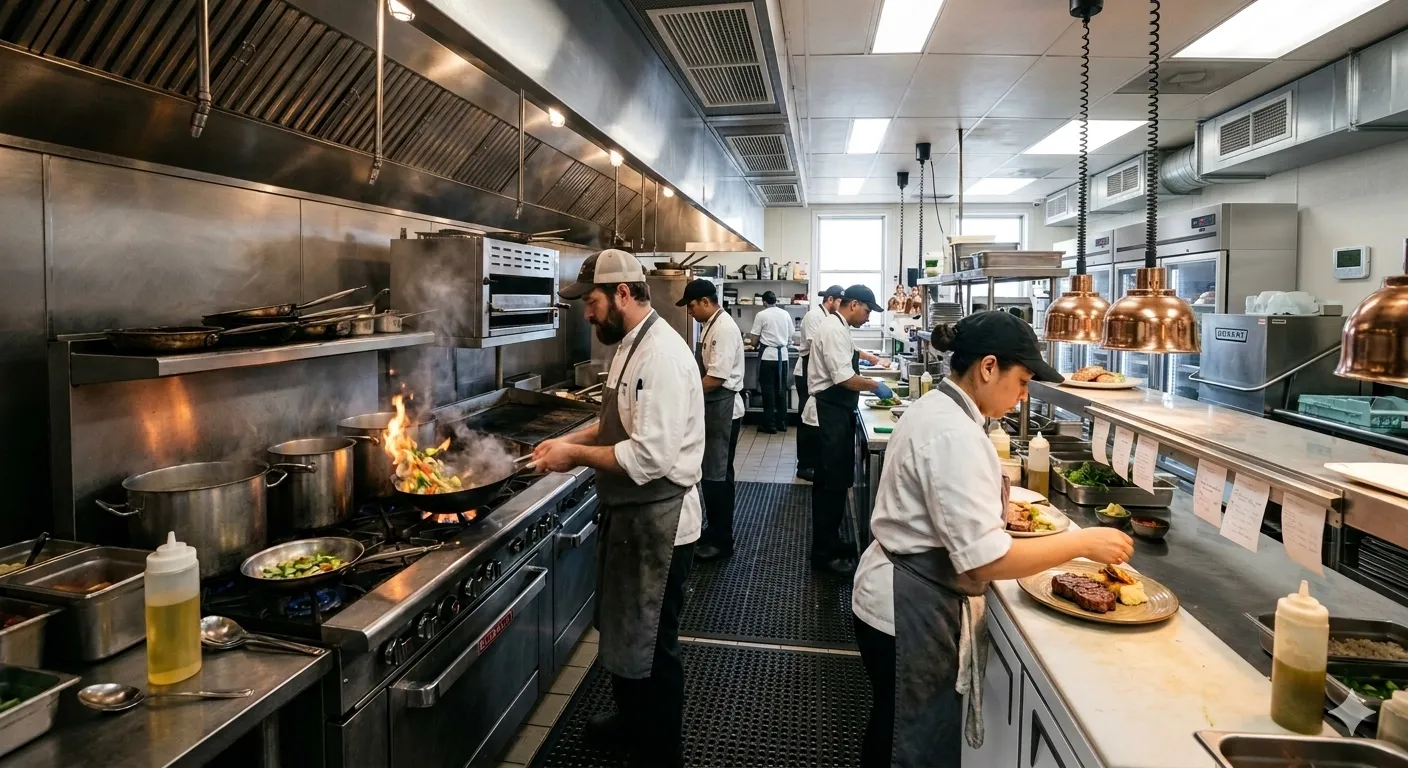
Commercial kitchen efficiency depends on reliable refrigeration and air conditioning. P&R Refrigeration helps Melbourne kitchens perform consistently.
Commercial kitchen efficiency affects operating costs, food safety compliance, and service continuity across hospitality and food retail environments. Refrigeration and air conditioning systems control temperatures that protect food quality, support equipment performance, and maintain suitable working conditions. At P&R Refrigeration, our system reliability and correct operation directly influence how efficiently a commercial kitchen functions each day.
Refrigeration Systems and Their Impact on Kitchen Efficiency
Refrigeration systems in commercial kitchens operate around the clock, making them one of the highest energy-consuming components in food service environments. Commercial kitchen refrigeration performance depends on appropriate system selection, correct installation, and ongoing servicing, all of which influence reliability and operating costs.
Key efficiency factors include:
• Correct system sizing to suit storage volume and daily usage demands
• Temperature consistency to protect perishable food and support compliance
• Effective door seals and insulation to minimise cold air loss
• Unobstructed airflow to reduce system strain and energy demand
• Regular servicing to maintain performance and reduce breakdown frequency
The Role of Air Conditioning in Maintaining Efficient Kitchen Operations
Commercial kitchens generate high cooking heat loads that directly increase demand on commercial air conditioning systems during service periods. Effective temperature control helps maintain stable indoor conditions while supporting daily operational requirements.
Well-managed air conditioning improves kitchen performance by:
• Managing cooking heat loads: Regulates heat produced by appliances during peak operating periods.
• Supporting staff comfort and productivity: Maintains workable temperatures that reduce fatigue and physical strain.
• Protecting equipment reliability: Limits exposure to excessive heat that can affect equipment performance.
• Stabilising refrigeration performance: Maintains ambient conditions that support consistent refrigeration temperatures.
• Improving airflow efficiency: Supports proper zoning and integration with ventilation systems to enhance HVAC efficiency in commercial kitchens.
How Refrigeration and Air Conditioning Systems Work Together
Refrigeration equipment releases heat into surrounding kitchen spaces during normal operation, increasing the load on air conditioning systems. Poor coordination between these systems leads to higher energy use, uneven temperature control, and added mechanical strain that can shorten equipment lifespan.
Coordinated system design and regular maintenance allow refrigeration and air conditioning units to operate efficiently without competing against each other. This balanced approach supports energy efficiency and stable kitchen conditions while aligning with food safety requirements set by Food Standards Australia New Zealand (FSANZ) for temperature control and safe food handling.
Efficiency Depends on System Performance
Commercial kitchen efficiency is directly influenced by how consistently temperature-control systems perform under daily operational demands.
P&R Commercial Refrigeration supports efficient kitchens through reliable commercial kitchen refrigeration and professionally managed commercial air conditioning systems. Professional commercial air conditioning solutions are designed and managed to maintain stability and long-term reliability.
Contact us for expert guidance on system performance and maintenance.
Related Blog Articles:
Preventive Commercial Refrigeration Maintenance Melbourne – Checklist for Commercial Kitchens
Commercial Refrigeration: How Coolroom Servicing Keeps You Ahead in 2026
2026 Commercial Refrigeration Systems for Food Manufacturers: Reliable Cooling for Production Facilities
Commercial Refrigeration Maintenance: Prevent Spoilage in Melbourne Restaurants
Optimized by: Netwizard SEO